
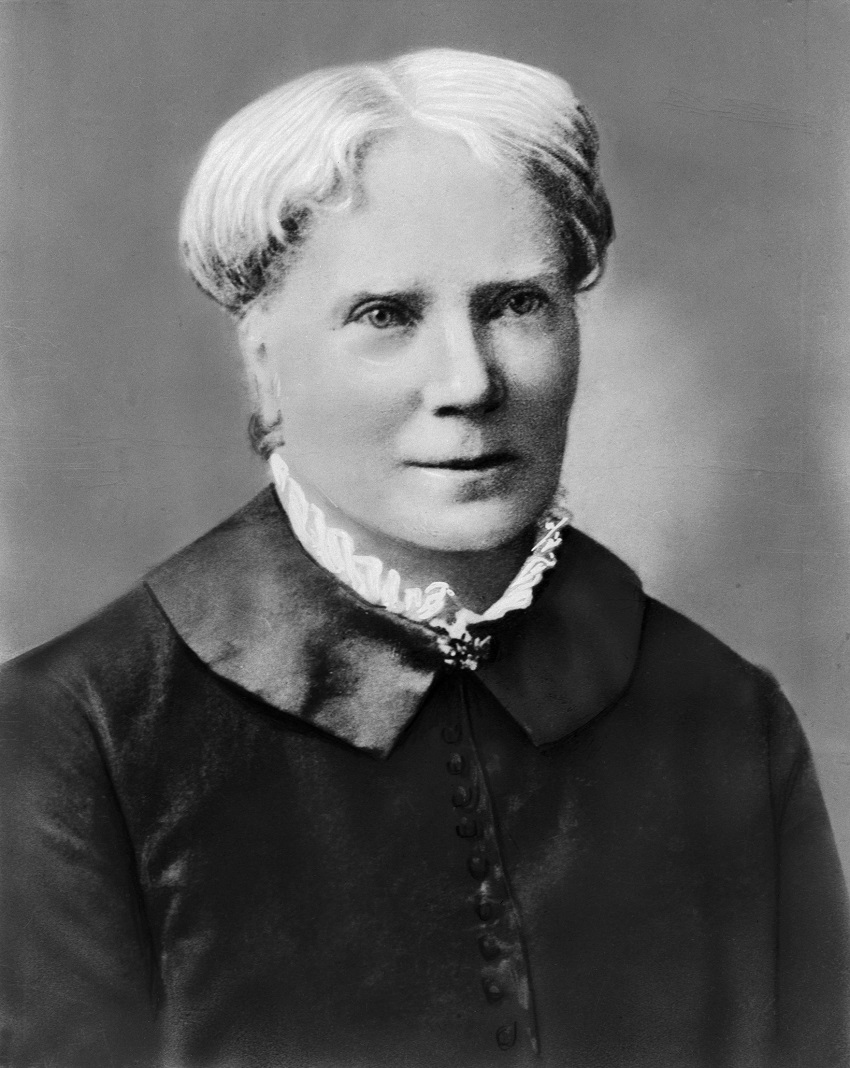
Elizabeth Blackwell was born in Bristol, Gloucestershire, England in February of 1821 to a prosperous family. They made their money in sugar, an industry widely known to rely on slaves for labor, which was in contradiction to her activist family.
Fighting for change is something Elizabeth experienced at an early age, as her father Samuel was strongly against slavery. When her family moved to Jersey City in the United states when Elizabeth was 11, they became active in the American abolitionist movement.
Three years later they moved to Cincinnati, Ohio, where Samuel died shortly after their move.
His death left the family impoverished, which prompted her sisters to open a private school. Elizabeth joined her sister’s profession after she moved to Kentucky, where she taught until 1845 when she moved first to North and then South Carolina, teaching until 1847.
During this time Elizabeth tended to a close friend who was dying of ovarian cancer. The friend lamented that if she had been treated by a female doctor, she may not have had to suffer so terribly. It was this friend who urged Elizabeth to study medicine.
At first Elizabeth did not have a strong reaction, thinking the proposal ridiculous. She wrote a friend that she had no inclination to study the body but was much more interested in the spirit of the human being.
But the more she thought about it the more the idea appealed to her, and she began pursuing her options in the medical field in earnest.
Because there was strong prejudice against the idea of a female doctor, Elizabeth first studied under the guidance of male physicians who were sympathetic to her cause. When she felt she had enough knowledge and conviction to become a doctor, she began applying to medical schools, who all promptly rejected her.
She was eventually accepted to Geneva Medical School in upstate New York on a fluke. The faculty decided to let the students make the decision regarding her admittance, saying that only one negative vote would trigger rejection of her application.
Because many students thought it was a prank being played by a rival school, they all voted ‘yes’, and Elizabeth became the first female student to be admitted to medical school.
She suffered greatly from her fellow students and even teachers, who made her sit separate from other students during lectures and often did not allow her to participate in labs.
Undaunted, Elizabeth plodded on and graduated at the top of her class, finally earning well-deserved respect from her fellow students.
Her sister Emily followed in her footsteps, and after earning her own medical degree, the sisters founded the New York Infirmary for Women and Children.
She also founded The Women’s Medical College of New York Infirmary, and after moving back to England in 1869, she established the London School of Medicine for Women, using Florence Nightengale as one of her consultants. Elizabeth was a professor of gynecology at the school until 1907.
Elizabeth Blackwell died on May 31, 1910 due to a stroke.
Thanks to Elizabeth’s tenacity in breaking down barriers, today 54.2% of all doctors are women, while only 45.8% are men.
 The damsel in distress...rescues herself.